The Essential Guide to Pet Grooming: Taking care of our pets is important for their general health and wellbeing, not just for aesthetic reasons. We can make sure that our furry friends stay tidy, cozy, and content by establishing a regular grooming schedule. The many facets of pet grooming will be covered in this article, such as bathing, brushing, trimming nails, cleaning ears, brushing teeth, checking for fleas & ticks, trimming hair around the eyes and paws, and looking for skin problems. The first step in a pet’s grooming regimen is frequently bathing. It aids in getting rid of odors, dirt, and debris that can build up over time.
Key Takeaways
- Properly dry your dog after bathing to prevent skin issues and infections
- Regular brushing and combing helps to prevent mats and tangles in your dog’s coat
- Trim your dog’s nails regularly to prevent overgrowth and discomfort
- Clean your dog’s ears regularly to prevent infections and wax buildup
- Brush your dog’s teeth regularly to prevent dental issues and bad breath
- Check for fleas and ticks regularly, especially during warmer months
- Trim hair around your dog’s eyes and paws to prevent irritation and vision obstruction
- Regularly check your dog’s skin for any issues such as rashes, lumps, or bumps
We should use a shampoo designed especially for our pets’ skin type when giving them a bath. Human shampoos have the potential to irritate skin and be overly harsh. To make the experience enjoyable for our furry friends, we should also make sure that the water is at a comfortable temperature—neither too hot nor too cold. It’s equally important to dry our pets after bathing.
If you’re looking to ensure your dog’s grooming routine is as effective as possible, you might also find it helpful to read about safe travel tips for pets. Preparing your furry friend for a trip can be just as important as their grooming. For more insights on keeping your pet safe while traveling, check out this informative article on 4 Tips for Safe Travel with Your Pet This Summer.
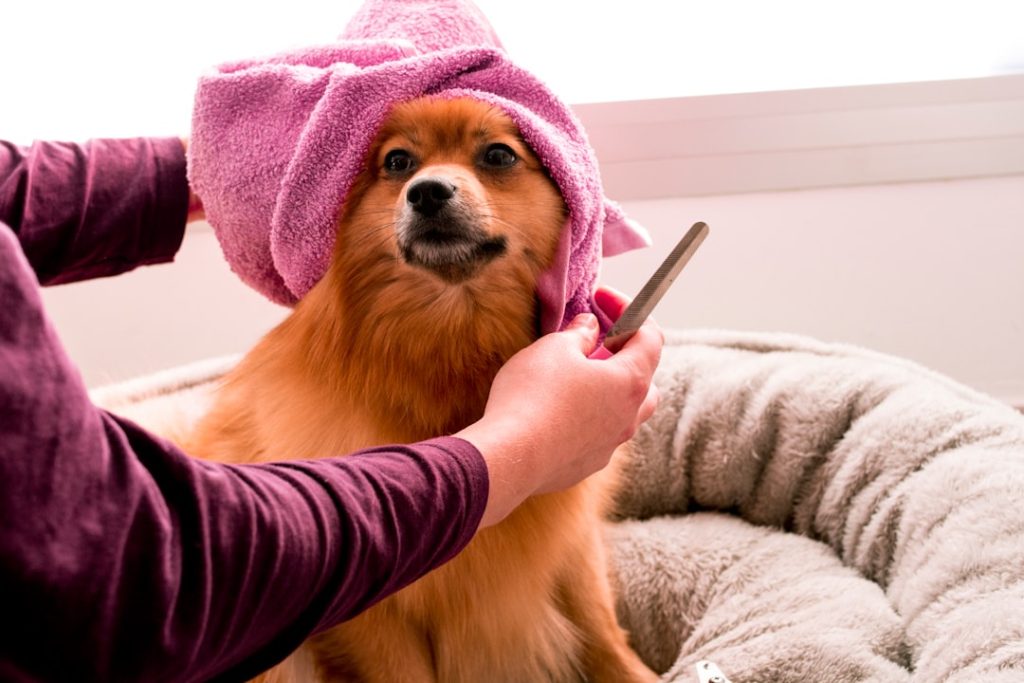
We can absorb as much water as possible by gently patting them dry with a towel. We might think about using a pet-safe blow dryer on a low setting for pets that can handle it. This can keep our pets warm & comfortable while hastening the drying process. To prevent overheating their skin, we must always keep the dryer at a safe distance.
In order to maintain our pets’ coats, brushing and combing are crucial parts of our grooming regimen. Frequent brushing distributes natural oils throughout their coat and gets rid of tangles, loose fur, and dirt. We may need to use different tools depending on the breed and type of coat—bristle brushes for short-haired breeds, or slicker brushes for long-haired ones. Brushing not only keeps our pets’ coats looking their best, but it also gives us a chance to strengthen our relationship with them. As we brush them, we can look for any odd bumps or lumps on their skin. This enables us to closely monitor their health in addition to helping us maintain their appearance.
In addition to being more comfortable, a well-groomed pet is also less likely to experience skin problems brought on by matting or dirt accumulation. Another important part of grooming that many pet owners neglect is nail trimming. Our pets may experience pain and discomfort when they run or walk due to overgrown nails.
If you’re looking to enhance your dog’s grooming routine at home, you might find it helpful to explore our related article on essential grooming tools and techniques. This resource provides valuable insights that complement the at-home grooming checklist for dogs, ensuring you have everything you need for a successful grooming session. For more information, check out this helpful guide that covers various aspects of dog care and grooming.
| Grooming Task | Frequency |
|---|---|
| Bathing | Every 4-6 weeks |
| Brushing | Several times a week |
| Nail trimming | Every 1-2 months |
| Ear cleaning | Once a week |
| Teeth brushing | Every day |
Maintaining the health of their paws and preventing these problems can be achieved by regularly cutting their nails. Depending on how quickly our pets’ nails grow, we should try to trim them every few weeks. When cutting nails, we have to be careful not to cut too close to the quick, which is a delicate area of the nail that houses nerves and blood vessels.
If you’re looking to enhance your dog’s grooming routine at home, you might also find it helpful to read about how to keep your furry friend comfortable during walks in hot weather. This informative article provides essential tips for ensuring your dog stays safe and hydrated while enjoying their outdoor adventures. For more insights, check out the article on walking your dog when it is hot.
Starting small and working our way up is the best course of action if we are unsure of how much to trim. The procedure can go more smoothly and effectively if you use a high-quality pet-specific nail clipper. We can try desensitizing our pets by introducing the clippers gradually & rewarding them with treats if they are nervous about getting their nails trimmed. For the health of our pets, ear cleaning is an essential but frequently disregarded part of grooming. Ear infections are common in pets, particularly in those with floppy ears or a lot of ear wax accumulation.
Frequent examination and cleaning of our pets’ ears can help avoid these problems. To gently remove any dirt or wax, we should use cotton balls or pads & an ear cleaner recommended by a veterinarian. We must be cautious when cleaning our pets’ ears & refrain from sticking anything deep into the ear canal. Alternatively, we can concentrate on the external ear & its surroundings. It’s crucial to speak with a veterinarian if we observe any strange smells, redness, or discharge during our examination because these could indicate an infection that needs medical attention.
Our pets require routine dental care to preserve their oral health, just like people do. In addition to lowering the risk of dental conditions like gingivitis and periodontal disease, brushing our pets’ teeth helps prevent plaque accumulation. Pets can be harmed by human toothpaste, so we should use toothpaste made especially for them. Both we & our pets can benefit from establishing a routine for brushing our teeth. Before using toothpaste, we can begin by introducing the toothbrush gradually so they can become accustomed to its feel.
Frequent brushing can greatly enhance our pets’ dental health and freshen their breath—ideally every day, but at least a few times a week. Common parasites like fleas and ticks can seriously discomfort our pets if they are not treated. A crucial aspect of pet grooming that keeps them happy & healthy is routinely checking them for these pests. We should inspect places like behind the ears, under the collar, & between the toes where fleas & ticks are likely to hide. It’s critical to take immediate action if we discover any fleas or ticks during our inspection. These pests can be eradicated with a variety of topical and oral treatments.
Also, keeping the space tidy by routinely vacuuming and cleaning pet bedding can help stop infestations before they start. Another crucial grooming task that improves our pets’ comfort and appearance is trimming the hair around their eyes and paws. In addition to causing irritation or infections, long hair around the eyes can impede vision. We can make them look presentable and enhance their quality of life by carefully cutting their hair.
In a similar vein, trimming the hair around their paws keeps them from matting and enables us to examine their paw pads for any injuries or foreign objects that might have lodged there. When cutting these delicate areas, we should use blunt-nosed scissors made for pet grooming to ensure safety. Seeking advice from a professional groomer can be helpful if we are unclear about how to move forward. Lastly, routine grooming gives us the chance to examine our skin for potential problems.
Skin issues can show up as redness, bumps, rashes, or excessive scratching, & they may be signs of underlying medical issues that need to be addressed. We can identify possible problems early on by examining our pets’ skin during grooming sessions. It’s crucial that we see a veterinarian right away if we find any anomalies during our inspection. Early intervention can significantly improve treatment results and guarantee our pets’ continued comfort and well-being. To sum up, grooming is an essential component of responsible pet ownership that extends beyond aesthetics.
We can improve our pets’ health and happiness while deepening our relationship with them by adding bathing, brushing, nail cutting, ear cleaning, teeth brushing, checking for fleas and ticks, trimming hair around the eyes and paws, and checking for skin problems into our daily routine. Frequent grooming greatly improves our furry friends’ general wellbeing in addition to keeping them looking their best.