
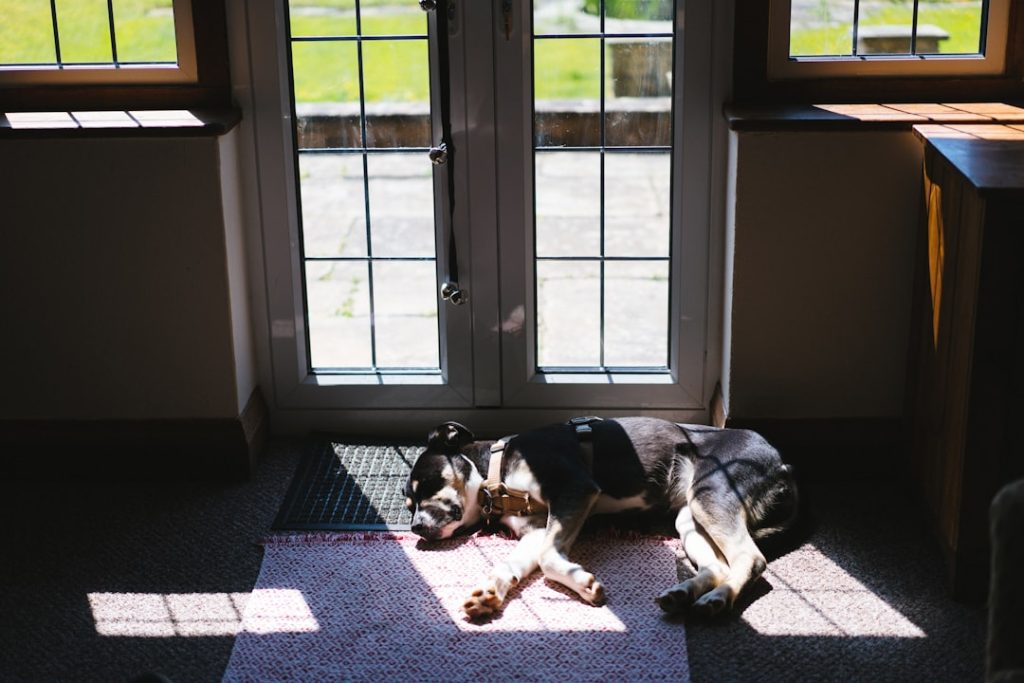
Enrichment Activities for Indoor Dogs: A Complete Guide As dog owners, we frequently struggle to maintain our furry friends’ interest, particularly when they are confined indoors. For our dogs’ physical and mental health, enrichment is not merely a luxury. If they don’t get enough stimulation, indoor dogs in particular may experience boredom, anxiety, and behavioral problems. We can give our pets a more fulfilling environment & ensure their happy and healthy lives by realizing the value of enrichment. Through enrichment activities, our dogs can engage their senses & explore their innate instincts.
Key Takeaways
- Enrichment is essential for indoor dogs to maintain mental and physical health.
- Interactive toys, puzzles, and scent games provide valuable mental stimulation.
- Indoor agility courses offer effective physical exercise in limited spaces.
- DIY treat-dispensing toys encourage reward-based engagement and fun.
- Tailoring activities to breed and personality enhances enrichment effectiveness.
These exercises can be anything from easy games to challenging puzzles that test their intelligence. Including enrichment in our daily routines helps our dogs learn how to solve problems, lowers their stress levels, & strengthens our relationship with them. In the end, a dog that is well-enriched is happier, and this happiness leads to a more peaceful home. Interactive puzzles and toys are among the best ways to give our indoor dogs mental stimulation.
If you’re looking for ways to keep your indoor dog engaged and happy, you might find inspiration in various enrichment ideas tailored for their needs. Additionally, you may want to check out this article on safe travel tips for pets, which can be particularly useful if you’re planning a trip with your furry friend. For more information, visit 4 Tips for Safe Travel with Your Pet This Summer.
These toys are made to entertain our pets while testing their cognitive capacities. We can select toys that fit our dogs’ unique tastes and skill levels thanks to the wide range of options available, from elaborate puzzle boxes to balls that dispense treats. Incorporating interactive toys into our dogs’ playtime not only keeps them busy but also fosters critical thinking in them. For example, our dogs must learn how to manipulate a treat-dispensing toy in order to access the rewards inside.
For our pets, this kind of mental challenge can be immensely fulfilling and give them a sense of success. Also, by switching up these toys on a regular basis, we can maintain the novelty and keep our dogs interested and enthusiastic about playtime. We must not undervalue the significance of physical exercise for our indoor dogs, even though mental stimulation is vital.
Building an obstacle course or indoor agility course can be a great way to mix enjoyment and exercise. We can create a course that encourages our dogs to jump, weave, and crawl through different obstacles by using common household items like chairs, cushions, & broomsticks. In addition to giving our dogs the necessary physical activity, setting up an agility course improves their confidence & coordination. We can use positive reinforcement to motivate them to finish each task as we lead them through the course. Our relationship is strengthened by this interaction, which also fosters our dogs’ confidence in us as their leaders.
If you’re looking for ways to keep your indoor dog engaged and mentally stimulated, you might find some valuable insights in this article about flea and tick control using natural options. While the focus is on pest management, it also highlights the importance of maintaining a healthy environment for your pet, which can complement enrichment activities. Engaging your dog with various toys, puzzles, and training exercises can enhance their well-being and create a more fulfilling indoor experience.
| Enrichment Idea | Description | Benefits | Estimated Time | Difficulty Level |
|---|---|---|---|---|
| Interactive Puzzle Toys | Toys that require dogs to solve puzzles to get treats. | Stimulates mental activity, reduces boredom. | 10-30 minutes | Medium |
| Hide and Seek | Owner hides and calls the dog to find them. | Enhances scent tracking and bonding. | 15-20 minutes | Easy |
| Training Sessions | Teaching new commands or tricks indoors. | Improves obedience and mental stimulation. | 10-15 minutes | Medium |
| Snuffle Mats | Mats with fabric strips to hide treats for sniffing. | Encourages natural foraging behavior. | 10-20 minutes | Easy |
| Indoor Fetch | Playing fetch with soft toys in a safe indoor space. | Physical exercise and mental engagement. | 10-15 minutes | Easy |
| Chew Toys | Durable toys for chewing and gnawing. | Relieves stress and promotes dental health. | Varies | Easy |
| Obstacle Course | Set up tunnels, cushions, and barriers for agility. | Physical exercise and problem-solving. | 20-30 minutes | Hard |
In order to keep our dogs challenged without getting bored, we can also modify the course’s level of difficulty according to their skill levels. Through nose games and scent work, we can use dogs’ exceptional sense of smell for enrichment. In addition to stimulating our dogs’ minds, using their sense of smell appeals to their innate scent-hunting tendencies. To begin, we can encourage our dogs to sniff out treats hidden throughout the house. For them, this straightforward game can be immensely satisfying and readily modified to accommodate varying skill levels.
More difficult tasks, like employing scent discrimination exercises or setting scent trails for our dogs to follow, can be added as we advance with scent work. These activities give our dogs a way to express their natural behaviors while also keeping them mentally active. We help satisfy our pets’ basic needs by letting them use their noses in a constructive way, which also fosters enjoyable relationships between us and our animals. Another great way to enrich our indoor dogs without going over budget is to make do-it-yourself treat dispensing toys. Common household objects, such as cardboard boxes or plastic bottles, can be repurposed to make interesting toys that release treats when our dogs play with them. Cutting holes in a plastic bottle, for instance, allows treats to fall out as our dogs roll it around, making playtime enjoyable.
In addition to saving us money, these do-it-yourself projects let us adjust the difficulty level to suit our dogs’ skill levels. To keep things interesting and new, we can try out various materials and designs. Also, it can be very entertaining for us to watch our dogs figure out how to get the treats. In addition to giving our pets the mental stimulation they need, this shared experience strengthens our bond with them. The distinct requirements of various dog breeds and personalities must be taken into account when planning enrichment activities.
While some breeds may flourish on mental challenges, others are inherently more active and need more physical exercise. We can make sure our dogs get the stimulation they require by customizing enrichment activities to fit their individual characteristics. For example, more physically taxing activities like agility training or fetch games in a large indoor space may be beneficial for high-energy breeds like Australian Shepherds or Border Collies. Conversely, intelligent breeds, such as German Shepherds or Poodles, might be particularly good at mentally taxing puzzle games or scent work.
We should also consider the unique personalities of each of our dogs; some may enjoy activities alone, while others do well in social situations with people or other dogs. We need to make our homes safe and stimulating if we want to give our indoor dogs as many opportunities for enrichment as possible. This entails evaluating our living areas and eliminating any potential dangers that might endanger our pets. In order to stimulate our dogs’ senses, we should also think about adding different textures, smells, and noises. Play & exploration can be promoted by setting up specific play spaces with a variety of toys.
After engaging in vigorous play, we may provide our dogs with cozy beds or blankets. Giving them access to windows so they can see the outside world can also pique their interest & keep them occupied when we’re not actively interacting with them. We set the stage for our dogs to flourish indoors by providing an enriching environment. Incorporating training & obedience exercises into our enrichment routines is essential for maintaining our dogs’ mental stimulation & promoting good behavior. Positive reinforcement strategies that reward desired behaviors with praise or treats allow training sessions to be seamlessly incorporated into playtime.
During these sessions, we can reinforce fundamental commands or teach new tricks, making learning enjoyable for both our dogs and ourselves. Throughout the day, brief training sessions can keep our pets interested by breaking up monotony and offering mental challenges. Also, these exchanges foster obedience and good manners while fortifying our relationship with our dogs. In conclusion, improving our indoor dogs’ quality of life is crucial to their general health. We can create a rewarding environment that keeps them happy & healthy by recognizing the value of mental stimulation, physical activity, & customized activities based on breed and personality.
We have a plethora of opportunities to interact meaningfully with our furry friends through training exercises, DIY projects, scent work, agility courses, & interactive toys. In the end, spending time on enrichment not only helps our pets but also makes pet ownership more enjoyable for us.